


04
2025-03
Welding technology of ductile iron and low-carbon steel
Typical products of automotive transmission shafts are ductile iron QT400-15 and 20 steel pipes, welded using arc cold welding technology. The technical key points of arc cold welding technology are as follows: Before welding, clean the weld joints of ductile iron QT40015 and 20 steel pipes to remove oil stains and rust, exposing the metallic luster. The cleaning range of the joint is 20~30mm on both sides of the groove. Use high-plutonium welding rod EZV(Z116) as filler, which will not crack after welding. When selecting structural steel welding rods, E5015 or E5016 (J507 or J506) have some cracks on the weld seam, and the mechanical properties of the repaired weld joint meet the process requirements. When welding, use small current, low voltage, short arc welding, weld one layer for small transmission shafts, and two layers for large transmission shafts. After welding one layer, temporarily cool and then weld the second layer to prevent overheating of the connector area. After welding, cool slowly to prevent cracking due to the different linear expansion coefficients of the two base materials. Slow cooling after welding during mass production of transmission shafts can be done in a heat treatment furnace. (2) QT40015 and 15 steel CO2 gas shielded welding
2025-03-04

07
2025-03
What are the stages of the casting process?
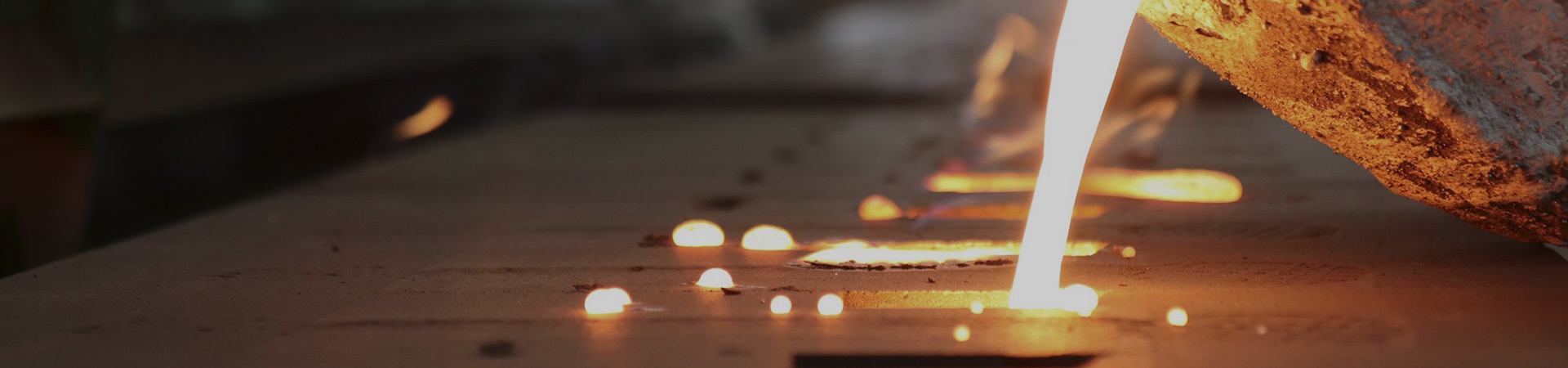
Metal casting (also known as liquid molding) is a shaping method that involves melting metal and casting it into a pre-made mold (allowing the liquid metal to solidify into a casting container) to obtain metal products with certain shapes and properties after solidification. Liquid molding is one of the earliest manufacturing processes. Despite its hundreds of years of history, making it no longer mysterious, it remains a fundamental forming technique. Castings have the advantages of low production cost, high process flexibility, and strong adaptability. They are suitable for producing castings of different materials, shapes, and weights, and are suitable for mass production. However, the disadvantages include large tolerances (the difference between the maximum and minimum limit sizes), the possibility of internal defects, and the need for more materials and equipment. In addition, casting production generates dust, harmful gases, and noise, thereby polluting the environment.
2025-03-07

Quality of service to win customer satisfaction

Visit the mobile terminal
View product information, technical knowledge at any time
Laizhou Dingtai Machinery Co., Ltd.
Telephone: +86-15053589222
E-mail: 15053589222@126.com
Address: Shentang Industrial Park, Hutouya Town, Laizhou City, Yantai City, Shandong Province